The history of St Eleth Church in Amlwch is deeply intertwined with the town’s evolution from a small village into an industrial power center during the copper boom. While the church is a central landmark, historical records clarify that the present building is not the oldest structure in the town. It was completed in 1800, making it younger than both Ty Mawr (1784) and Mona Lodge (1785).
The Ancient Predecessor
Before the current church was constructed, an older parish church served the community This medieval structure may have been located further down the hill than the present site. This original building was described as a small structure featuring a wooden spire. Notably, this spire was famously struck by lightning twice during its history.
Growth and Industrial Influence
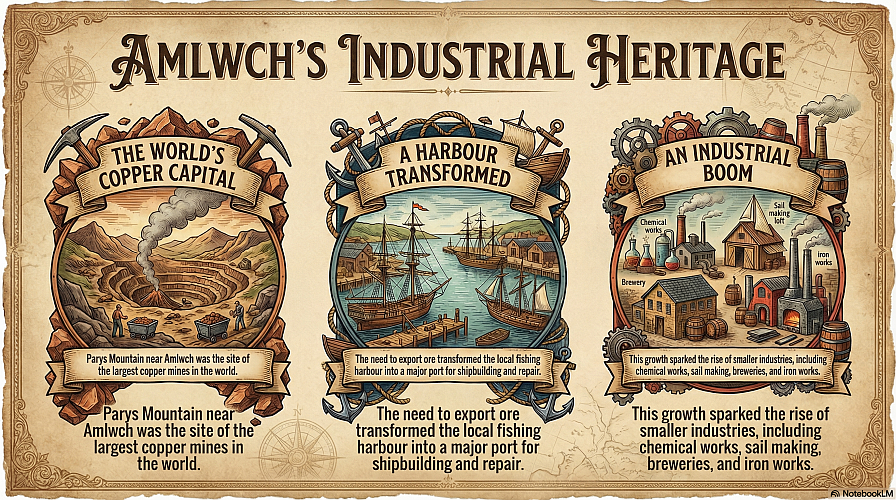
The church’s records provide a window into Amlwch’s social history. As early as 1743, the Rev. William Johnson was recorded in the parish register, documenting the lives of residents before the Industrial Revolution transformed the area. As the copper industry peaked, the church became a focal point for the town’s elite and working classes alike. In 1876, a major addition was made to the church tower with the installation of a clock. This was a vital development for the community’s synchronization; previously, the town relied on the Gwaith Hills chemical works to relay Greenwich Mean Time, which they received via telegraph.
Prominent Clergy and Social Lore
Several figures served the parish throughout the 19th century, often finding themselves at the center of local drama. In 1841, Joshua Jones was the Parish Curate. By the mid-1870s, James Smith served as curate and Richard Roberts as rector. In the 1881 census, Richard Roberts was officially recorded as the Vicar, residing at the Vicarage, while Henry Lloyd served as the Curate.
Community and Memorials
The church was the site of the town’s most significant communal events. In 1828, it hosted the massive funeral of Cadi Rondol (Catherine Randal), a local religious character whose procession was so large it filled the streets. Although she was a poor woman who lived in a small cottage, her funeral costs were paid by the industrialist James Webster, though no headstone was ever erected for her .
The “Eleth” name remains a cornerstone of Amlwch’s identity beyond the church walls. It inspired the name of the Eleth Hotel, and the local St Eleth Lodge Number 1488 was a prominent masonic organization whose members included influential figures like the mine proprietor Thomas Fanning Evans. Today, the church remains a primary monument to the town’s storied past.