Since 1980, the heritage industry in the Amlwch area has evolved from informal local interest into an organised, tourism‑oriented sector centred on copper mining and coastal industrial landscapes. This shift has combined community action, external funding, and public policy, using the past as a tool for regeneration.[news.bbc.co]
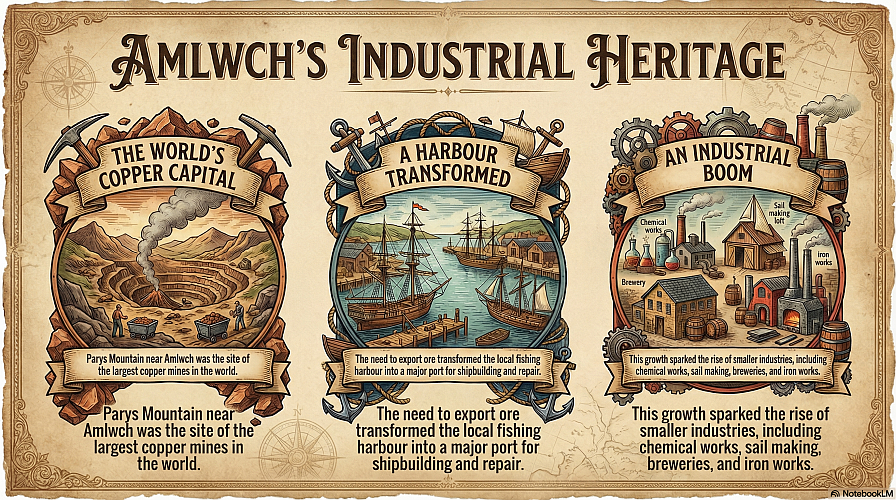
In the early 1980s, industrial remains on Parys Mountain and around Amlwch Port were largely redundant relics of mining and maritime decline, with limited interpretation or visitor infrastructure. Over subsequent decades, academic work and local campaigning helped reframe these abandoned workings and harbour structures as assets of international significance rather than liabilities.
From the 1990s onwards, formal heritage organisations emerged, most notably the Amlwch Industrial Heritage Trust, founded to conserve buildings, engine houses and landscapes linked to eighteenth‑century copper mining. The Trust’s efforts supported consolidation of historic fabric on Mynydd Parys and at Porth Amlwch, creating a stronger platform for guided visits, trails and educational activities.
Since the 2000s, local and regional strategies have increasingly treated heritage and the visitor economy as central to North Anglesey’s recovery from major industrial closures. Recent town investment plans and coastal path improvements emphasise signage, landscaping and public realm upgrades that draw attention to Amlwch’s rich industrial past while improving quality of life for residents.
A major milestone came with the Copper Kingdom project, which secured lottery funding to interpret Amlwch’s mining story and the archaeology of Parys Mountain. This led to the creation and enhancement of visitor facilities at the old harbour, including the Copper Kingdom Centre, making the town a recognised destination for industrial heritage tourism within Anglesey’s offer.
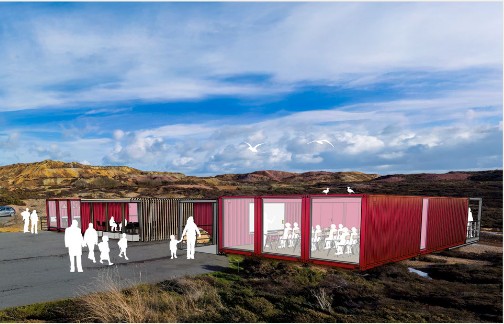
The Copper Kingdom Museum was a cherished fixture of Amlwch Port, housed within the Copper Bin and Sail Loft in Amlwch port. However, following the challenges of the global pandemic and significant structural issues a pivotal moment was reached in late 2022. It was decided to retire from those building and reunite the copper mining heritage with the dramatic landscape of Parys Mountain.