Since 1980, tourism in the Amlwch area has shifted from a relatively modest, passing trade to a more deliberate visitor economy built around coastal scenery, industrial heritage and regeneration projects. This development has been closely tied to wider efforts to diversify North Anglesey’s economy after major industrial decline.
In the early 1980s, Amlwch was better known as a working town than as a holiday destination, with tourism largely limited to day visitors exploring the coast or staying elsewhere on Anglesey. Over time, growth in car‑based domestic tourism and the rise of the Anglesey Coastal Path brought more walkers and independent travellers through the area, increasing demand for basic services and accommodation.
From the 1990s onwards, local authorities and partners began to see Amlwch’s harbour, cliffs and mining landscapes as underused tourism assets that could complement the island’s established beach resorts. Reports on Amlwch Port highlighted opportunities for marine leisure, heritage attractions and small hospitality businesses, provided that quays, public realm and access could be improved.
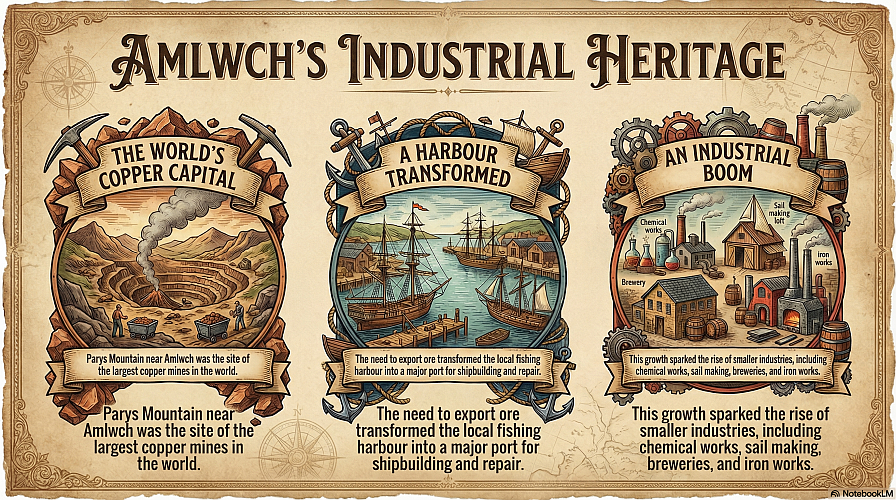
Since the 2000s, investment in industrial heritage interpretation, especially at Porth Amlwch and Parys Mountain, has strengthened the town’s appeal to niche markets such as walking, heritage and geology tourism. Marketing material now presents Amlwch as a gateway to the “Copper Kingdom” and to quieter, more rugged stretches of the Anglesey coast, rather than as a stand‑alone resort.
Most recently, large regeneration schemes have explicitly linked tourism, small business space and environmental enhancement. A £10.4 million North Anglesey project, including refurbishment of the former Marine Terminal Building at Porth Amlwch, aims to create modern commercial units, improve the visitor offer and support nearly 100 jobs, signalling that tourism‑related activity is expected to play a growing role in Amlwch’s future economy.